Understanding Dopamine Dysregulation in ADHD
What Everyone Gets Wrong About "Low Dopamine"
Angela Duckworth, psychologist and author of "Grit," recently wrote in The New York Times that "willpower is overrated" and achievement comes from "situational agency"—arranging your life to minimize self-control needs. "Rather than try to resist temptation in the moment, many successful people arrange their lives to minimize the need for willpower from the outset," she said.
So this might be a perfect time to talk about dopamine. Most people think ADHD means having low dopamine. The truth is more nuanced—and more interesting.
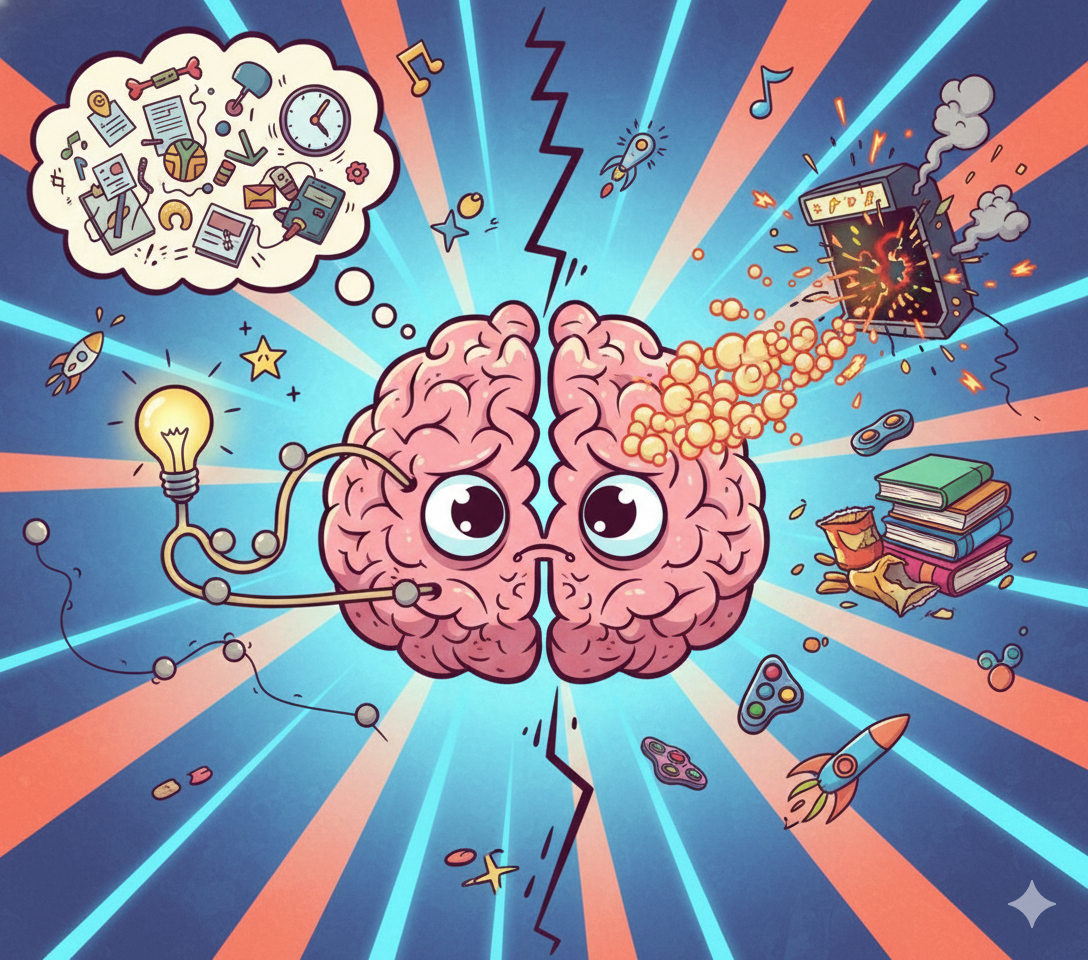
Your ADHD brain doesn't necessarily have less dopamine. Instead, it has dysregulation: the system that releases, receives, and recycles dopamine isn't working optimally. This changes everything about how you experience motivation, focus, and reward.
Think of it like a thermostat that's broken. The room might have plenty of heat, but the thermostat can't read it properly. So the system keeps trying to warm things up, never quite satisfied. For ADHD brains, the dopamine thermostat is stuck on "seeking" mode.
The Productivity Lie
The "productivity playbook" assumes consistent motivation, linear focus, and steady effort. It tells you to "just start," "stay focused," and "power through." That's the productivity lie—it works for neurotypical brains but fails ADHD brains because it ignores dopamine dysregulation.
Your brain doesn't respond to "try harder." It responds to novelty, urgency, and interest because those trigger the dopamine release it needs to activate.
How This Shows Up in Daily Life
The Novelty Trap: Your brain craves stimulation because it needs more dopamine to feel engaged. You hyperfocus on interesting things for 12 hours but can't start boring work emails.
Motivation Runs on Urgency: Deadlines trigger adrenaline and dopamine spikes. That's why you do your best work under pressure—urgency provides the neurochemical fuel.
Reward Processing is Different: Brain imaging shows reduced activity in the ventral striatum (reward center) during anticipation of rewards. You want something, but your brain doesn't generate the "want" signal.
What This Means in Practice
Here are 5 ways to work with your dopamine system:
Create artificial urgency: Set deadlines for small tasks to trigger dopamine spikes
Add novelty: Gamify boring tasks or rotate between them to maintain stimulation
Use body doubling: Work alongside someone (in person or video) for social dopamine boost
Pomodoro with rewards: Work 25 minutes, then do something enjoyable for 5 minutes
Start tiny: Begin with a 2-minute micro-task to generate initial momentum
The Path Forward
Dopamine dysregulation isn't something to shame yourself about. It's a neurological reality that, once understood, becomes your greatest asset in designing a life that actually works.
The breakthrough isn't in changing your brain—it's in changing your environment and expectations. Stop asking "Why can't I just focus on boring things?" and start asking "How do I make this task interesting enough to trigger my brain's dopamine response?" This is the foundation of chaos management: honoring how your brain works and building systems that work with that reality, not against it.
For more helpful insights and tools designed with ADHD in mind, keep following NoPlex. We're here to help make life more manageable and meaningful.
References
Duckworth, A. (2025, December 28). "Willpower Doesn't Work. This Does." The New York Times. https://www.nytimes.com/2025/12/28/opinion/willpower-doesnt-work-this-does.html
Volkow, N. D., & Swanson, J. M. (2024). The dopamine hypothesis for ADHD: An evaluation of evidence. Frontiers in Psychiatry / PubMed. This review explains that ADHD is better understood as dopamine dysregulation rather than a simple “low dopamine” state.
Attention-deficit/hyperactivity disorder – disease primer. (2024). Nature Reviews Disease Primers. Overview of ADHD neurobiology, including altered dopamine signaling and its impact on motivation and reward.
Cortese, S. et al. (2013). Ventral–striatal responsiveness during reward anticipation in ADHD: A meta-analysis of fMRI studies. Journal of Psychiatric Research. Shows ventral striatum hyporesponsiveness during reward anticipation in ADHD, supporting the “reduced ‘want’ signal” idea.
Disclaimer: This article is intended for informational purposes only. For personal diagnosis or treatment, consult a qualified healthcare provider.